


Signs of Rats & Mice in Your Home
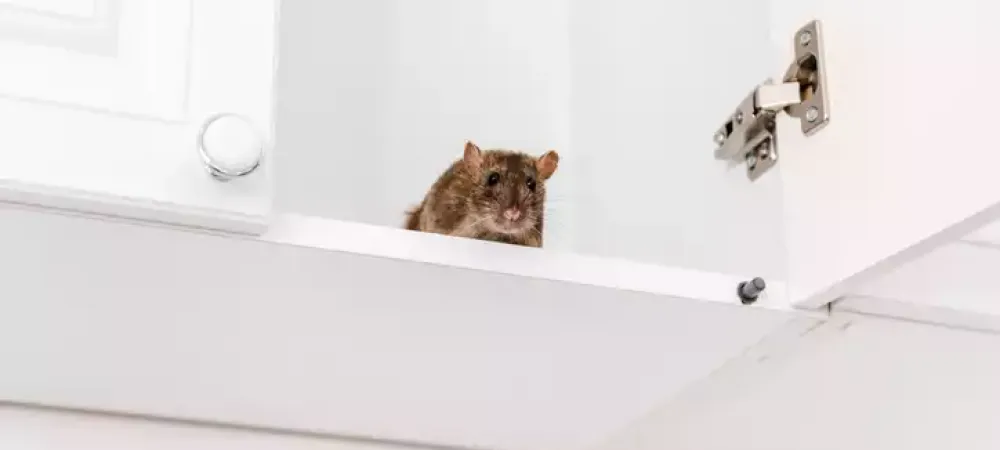
If you suspect rodents have moved into your home, the first step is figuring out exactly what you're up against. Rats and mice are both common invaders in Coastal Carolina, and while they're both rodents, they behave differently and leave distinct clues that can help you identify which one is causing the problem.
Quick answer: Mouse droppings are smaller than rat droppings, around 1/8 inch compared to 1/2 inch, and mice tend to build smaller nests out of shredded paper or insulation. Rats are more likely to burrow into dirt or build larger nests from sticks and debris, and their teeth marks cut deeper and wider into surfaces. Effective exclusion means sealing entry points with materials each species can't chew through.
Droppings
One of the clearest differences between rats and mice is the size and shape of their droppings:
- Mouse droppings are small, around 1/8 to 1/4 inch long, and pointed at both ends. They're typically black or brown and scattered randomly wherever mice are actively feeding or nesting.
- Rat droppings are larger, around 1/2 inch long, and blunt at the ends. Fresher droppings are dark brown or black, growing lighter as they age. Rats tend to leave droppings in clusters rather than scattering them.
Nesting Materials
Both rats and mice build nests, but they use different materials to do it:
- Mice favor soft, shredded material like paper, insulation, or clothing fibers. Their nests are often small, golf ball sized, and tucked into protected spaces like wall voids or storage boxes.
- Rats create larger, more established nests from twigs, leaves, and debris. They tend to burrow into dirt or nest in crawl spaces more often than inside finished living spaces. Rat nests can be substantial, depending on the colony.
Chew Marks
Rodent teeth never stop growing, so both rats and mice chew constantly to wear them down. The size of the teeth marks left behind can help identify the pest:
- Mouse teeth leave behind small, fine marks, typically around 1/8 inch wide. Marks are often scattered and can be shallower since their teeth are smaller.
- Rat teeth are larger, leaving marks closer to 1/4 inch wide. Their bites cut deeper into wood and wires, and the gnaw marks are often more concentrated in established nesting or feeding areas.
Behavior and Capabilities
A few key differences in how each species gets around your home:
- Rats are stronger climbers and swimmers. They can scale rough walls, climb down into toilets from roofs, and travel through sewer lines. Hearing scratching noises overhead is more likely to be a rat than a mouse.
- Mice are curious and more likely to investigate new objects, including traps. They don't travel as far from their nests as rats, rarely more than 20-30 feet, while rats will roam an entire building.
- Both are mostly nocturnal, but rats are warier of new objects in their path, which can make early detection a challenge. Mice are more likely to be heard scurrying at night.
Preventing Entry and Sealing Them Out
Rats can squeeze through a hole as small as a half-dollar, while mice can fit through one the size of a dime. Effective exclusion means sealing potential entry points with materials they can't easily chew through.
- Use steel wool, wire mesh, or metal flashing to plug gaps and holes, not just caulk or spray foam. Rodents can chew through softer materials.
- Check for gaps around utility lines, vents, and pipe entry points. Rats and mice often use these to gain access to a building's interior.
- Trim tree branches away from your roof and keep shrubs near the foundation well pruned. Rats are adept climbers and will use overhanging vegetation as a highway to access your home.
- Secure food sources in airtight containers, including pet food. Crumbs and spills are an open invitation for rodents looking for an easy meal.
Exclusion isn't a one-time fix. Rats and mice are persistent, and they'll take advantage of any new opening that forms over time. Staying on top of it with regular inspections and proactive sealing is the most effective way to keep them from moving in long-term.
When to Call a Professional
A small mouse problem can quickly become a major mouse infestation, and rats pose a substantial risk of property damage if left unchecked. If you're noticing any of the signs above, it's worth having a professional inspect before the problem gets worse.
Bug-N-A-Rug handles rodent control across both residential and commercial properties in Wilmington, Myrtle Beach, and throughout our Coastal Carolina service area. Our trained technicians will identify the species, assess the extent of the infestation, and walk you through a clear treatment and exclusion plan to solve it.