


What to Do If You Spot Termite Swarmers Around Your Home
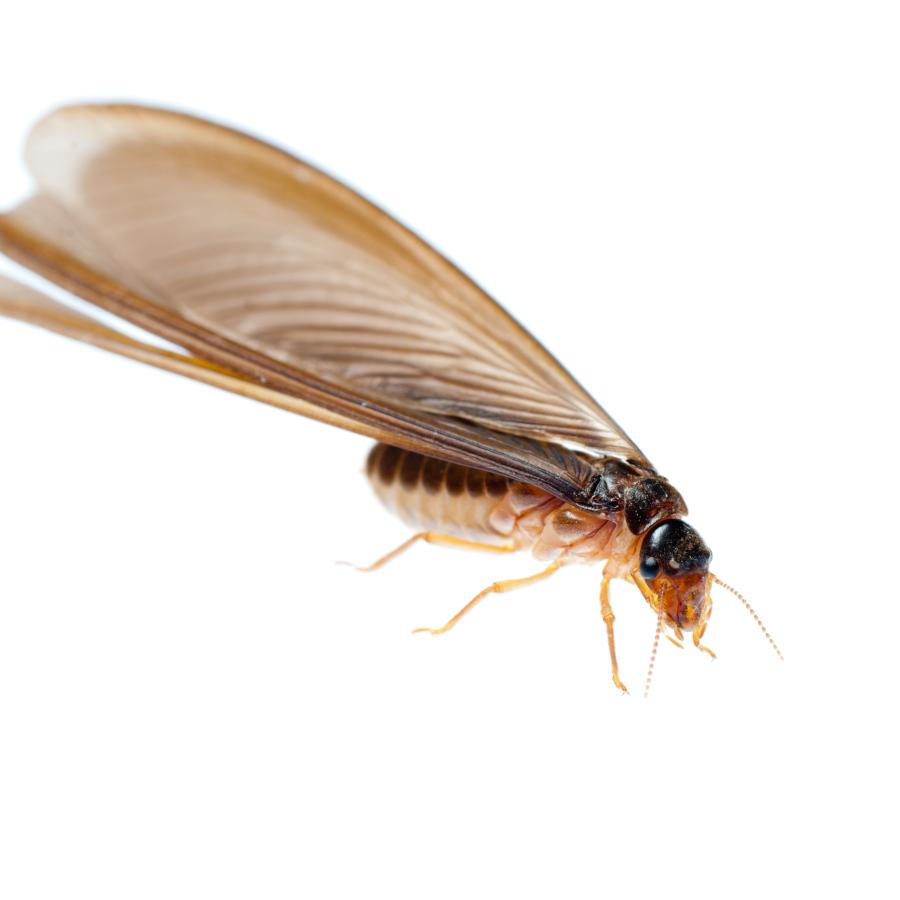
Termite swarmers are one of the only visible warning signs homeowners get before termite damage becomes a serious problem. Most people either mistake them for flying ants or spray them and move on. Neither response addresses what's actually going on.
Quick answer: Swarmers are winged reproductive termites that leave a mature colony to mate and start new ones. They don't cause structural damage themselves, but seeing them inside or around your home means an established colony has likely been feeding nearby, potentially for years. The swarmers are the symptom. The colony is the problem.
How to Tell Termite Swarmers Apart from Flying Ants
This is the most common point of confusion, and it matters because the response is completely different.
- Body shape: Termite swarmers have a straight waist and uniform body. Flying ants have a pinched waist with a distinct segmented shape.
- Wings: Termite swarmers have two pairs of equal-length wings that extend well past the body and break off easily. Flying ant wings are unequal in length.
- Antennae: Termite swarmers have straight, bead-like antennae. Flying ants have elbowed antennae.
If you're finding small piles of discarded wings near windowsills or doors, that's almost always termites. Wings breaking off after a swarm is a normal part of the termite reproductive cycle, not something flying ants do.
What It Means When You See Swarmers Inside vs. Outside
Location matters when interpreting a swarmer sighting:
- Outside near your foundation or yard: Swarmers may be coming from a colony in the soil, nearby mulch, a tree stump, or wood debris. Worth monitoring, but not automatically a sign of structural activity.
- Inside your home: This is a stronger indicator that termite activity is in or under the structure itself. Swarmers don't travel far, so finding them inside means the colony they came from is close.
Swarmers don't eat wood or cause structural damage on their own. Their sole purpose is reproduction. But their presence signals that a large, established colony has been quietly feeding on wood in or around the property, potentially for years.
What Not to Do When You Spot Termite Swarmers
- Don't spray them with pesticide. It kills the swarmers but destroys evidence and does nothing to address the colony. A pest control technician identifying the species from a live or recently dead swarmer is useful information.
- Don't assume the problem is gone when the swarm clears. Swarms typically last 30 to 40 minutes. The colony that produced them doesn't go anywhere.
- Don't wait to see if it happens again. Capture two to three swarmers in a sealed bag for identification and call for a termite inspection immediately.
Other Signs of Termite Activity to Look For
If you've spotted swarmers, check these areas of your home while you wait for an inspection:
- Mud tubes on foundation walls or crawl space piers. These look like thin dried lines of dirt about the width of a pencil, running vertically up foundation walls or along crawl space piers. Termites build them to stay protected while traveling between the ground and your home.
- Hollow-sounding wood. Termites eat from the inside out. Tap on baseboards, door frames, or exposed wood and listen for a papery or hollow sound.
- Doors and windows that suddenly stick. As termites damage wood framing, it can warp and cause doors and windows to fit unevenly in their frames.
- Discarded wings near entry points. Piles of small wings near windowsills, doors, or vents are a reliable sign swarmers have been present recently.
Why Coastal Carolina Homes Face Higher Termite Risk
North Carolina is within the range of both the Eastern subterranean termite and the Formosan subterranean termite. As temperatures rise in late winter and spring, foraging accelerates, and swarmers emerge to start new colonies. The coastal climate, warm soil temperatures, and persistent humidity keep termites active for a longer stretch of the year than in inland or northern markets.
Our team provides termite inspections and ongoing termite protection across our Coastal Carolina service area. If you've spotted swarmers or any of the signs above, an inspection is the right next step before the situation becomes a structural one.