


What Are Sand Fleas?
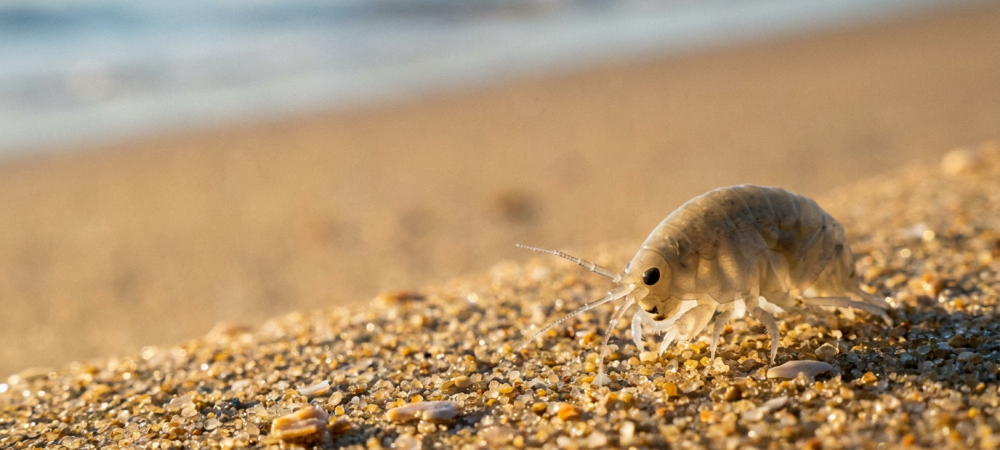
Sand fleas are small, shrimp-like crustaceans commonly found along sandy beaches, particularly around damp sand and washed-up seaweed. The term usually refers to beach amphipods, sometimes called beach hoppers, that jump when disturbed. Despite their name, these creatures aren't true fleas and don't bite humans.
The name "sand flea" can also describe mole crabs and certain parasitic fleas. These animals differ in appearance, habitat, and behavior, which explains why there's often confusion about whether sand fleas are dangerous.
What Do Sand Fleas Look Like?
Sand fleas commonly found on beaches look like tiny shrimp with curved, segmented bodies and multiple pairs of legs. They typically have gray, brown, or tan coloring that helps them blend into the sand.
Common identifying characteristics include:
-
Body shape: Curved, segmented, and flattened from side to side
-
Color: Gray, brown, tan, or nearly translucent
-
Legs: Multiple pairs of legs beneath the body
-
Movement: Quick, jumping motions when disturbed
-
Location: Damp sand, especially beneath seaweed and other beach debris
Unlike actual fleas, which are insects with six legs, beach amphipods are crustaceans. Their jumping movement is one of the main reasons they're commonly mistaken for fleas.
Sand Flea Size
Most beach-dwelling sand fleas measure between a few millimeters and approximately half an inch long, depending on the species and its maturity.
Smaller individuals can be difficult to spot against the sand, while larger sand fleas are more noticeable when they jump. Their size also distinguishes them from mole crabs, which have a more rounded body and can grow considerably larger.
Do Sand Fleas Bite?
The sand fleas commonly found on North Carolina beaches do not bite humans. Beach amphipods feed primarily on decaying seaweed and other organic material rather than blood, so they don't seek out people or pets for food.
However, some unrelated animals called sand fleas do bite. The tropical parasitic flea Tunga penetrans, for example, can penetrate human skin and cause a condition called tungiasis.
If you develop itchy bumps after visiting the beach in North Carolina, mosquitoes, no-see-ums, or other biting insects are more likely responsible than beach amphipods.
Are Sand Fleas Dangerous?
Most sand fleas encountered along North Carolina's beaches are harmless and pose no significant health risk to humans or pets. Beach amphipods don't feed on blood, infest homes, or spread diseases through bites.
They actually play a beneficial role in coastal ecosystems by breaking down decaying seaweed and other organic material that washes onto shore.
However, parasitic sand fleas found in certain tropical regions can be dangerous. These true fleas may cause:
- Skin irritation and inflammation
- Painful lesions where the flea enters the skin
- Secondary bacterial infections
- Tungiasis, a parasitic skin condition
These risks are associated with specific parasitic flea species, not the harmless beach amphipods commonly found in North Carolina.
Where Do Sand Fleas Live?
Sand fleas live in sandy coastal environments where moisture, shelter, and decomposing organic material are available. Beach amphipods typically stay near the high-tide line and hide beneath debris to prevent their bodies from drying out.
Common sand flea habitats include:
- Damp sand above the waterline
- Piles of washed-up seaweed
- Areas beneath driftwood and beach debris
- Sandy shorelines with decaying plant material
Many beach amphipods remain hidden during the day and become more active at night when temperatures are cooler and moisture levels are higher.
Are There Sand Fleas in North Carolina?
Yes, sand fleas are found along North Carolina's coastline, including Wrightsville Beach, Carolina Beach, Topsail Island, and other beaches near Wilmington. The creatures commonly referred to as sand fleas in these areas are generally harmless beach amphipods or mole crabs.
Beach amphipods are especially common around seaweed and organic debris, while mole crabs typically burrow into wet sand where waves wash onto the beach.
Although both may be called sand fleas, neither is a true flea, and neither feeds on human blood.
| Pest | Appearance | Do They Bite? |
|---|---|---|
| Beach amphipods | Small, curved, shrimp-like bodies | No |
| Mole crabs | Oval, crab-like bodies that burrow in sand | No |
| No-see-ums | Extremely small, flying insects | Yes |
| Traditional fleas | Tiny, dark, wingless insects | Yes |
| Mosquitoes | Slender flying insects with long legs | Yes |
Sand Fleas on North Carolina Beaches
Most sand fleas found along North Carolina's beaches are harmless crustaceans that help break down organic material along the shoreline. While their jumping behavior can resemble that of actual fleas, they don't bite humans or require pest control treatments.
If you're experiencing bites around your home or after spending time outdoors, identifying the responsible insect is important. Mosquitoes, no-see-ums, and traditional fleas are more likely to cause biting concerns in coastal communities.