


Fleas
Fleas are tiny parasitic insects that feed on the blood of warm-blooded animals. Although they are most commonly associated with pets, fleas can infest homes and properties even when no animals live on site. Once introduced, flea populations can grow quickly under the right conditions.
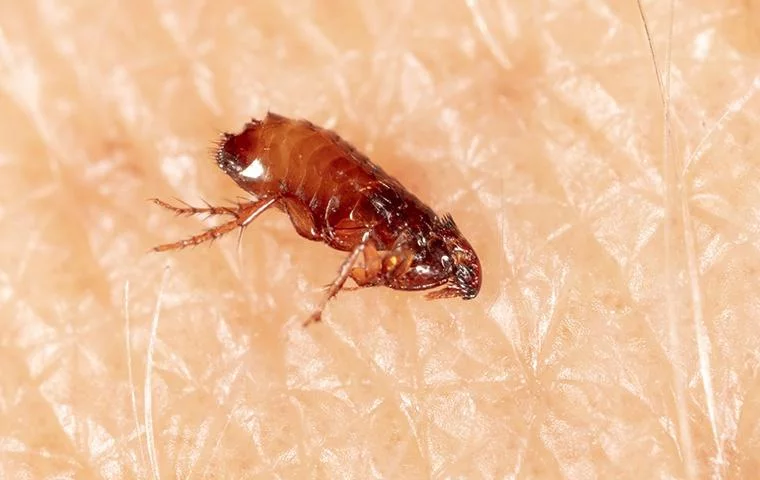
Adult fleas are dark reddish-brown and have flattened bodies that allow them to move easily through fur and fabrics. They are wingless but have powerful hind legs that enable them to jump long distances, making it easy to move between hosts and environments.
Are Fleas Dangerous?
Fleas are considered harmful pests due to both their bites and the health risks they pose.
Flea bites often cause itching and irritation, and repeated scratching may lead to skin infections. Fleas can also transmit parasites, including tapeworms, to both people and pets. In severe infestations, pets and wildlife may experience blood loss that can lead to anemia.
Beyond direct health concerns, flea infestations can disrupt daily life and spread quickly throughout indoor spaces.
Why Fleas Appear on Properties
Fleas are most often introduced by animals. Rodents, wildlife, and pets can carry fleas onto properties, where the insects then spread into surrounding areas.
Once present, fleas can reproduce indoors and outdoors. Even a small number of fleas entering a structure can lead to a widespread problem if conditions allow eggs and larvae to develop undisturbed.
Fleas do not require pets to remain active, which is why infestations may occur in homes, apartments, and businesses regardless of animal ownership.
Where Fleas Are Commonly Found
Fleas are typically found either on animal hosts or in shaded areas where hosts frequently pass through.
Outdoors, fleas and their immature stages may be found:
- In tall grass.
- Under leaves and debris.
- In soil beneath decks, porches, and shrubs.
- In areas where animals rest or nest.
Indoors, fleas often hide in:
- Carpets and rugs.
- Upholstered furniture.
- Pet bedding and blankets.
- Baseboards and floor cracks.
- Sleeping and resting areas.
Because fleas can remain hidden for long periods, infestations may not be immediately obvious.
When Flea Problems Require Professional Help
Persistent flea activity, repeated bites, or infestations that spread throughout indoor spaces often indicate a larger issue. Fleas reproduce rapidly and can remain active across multiple life stages, making full elimination difficult without professional intervention.
Preventing Flea Activity
General flea prevention focuses on reducing exposure and limiting conditions that allow fleas to thrive.
- Inspect clothing and pets after spending time outdoors.
- Maintain regular grooming and hygiene for pets.
- Vacuum indoor areas regularly, especially where animals rest.
- Keep grass trimmed and remove dense vegetation near structures.
- Reduce wildlife and rodent activity around the property.
- Secure trash containers and remove animal attractants.
- Seal exterior gaps to limit entry by animals that may carry fleas.