


Silverfish
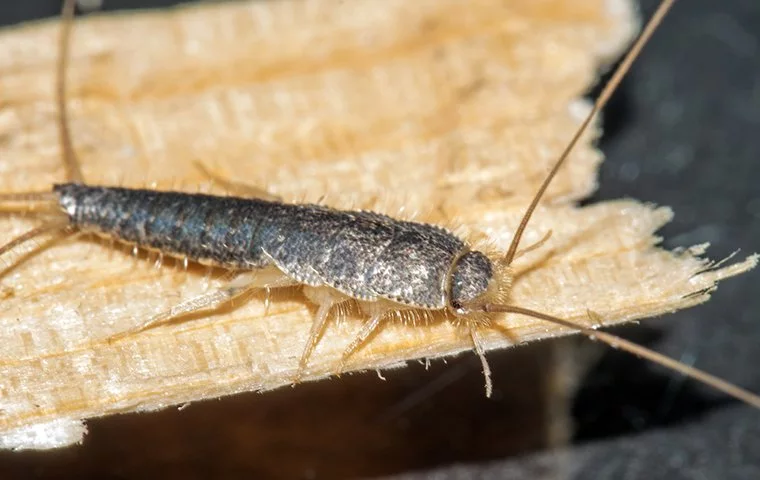
Silverfish are wingless insects commonly found in indoor environments with elevated moisture. They are considered nuisance pests and are named for their silvery appearance and distinctive, fish-like movement. When disturbed, silverfish move quickly using a wiggling motion that allows them to escape into cracks and hidden areas.
Adult silverfish typically measure between one-quarter and one-half inch long. They have elongated, carrot-shaped bodies that taper toward the rear, along with long antennae and three tail-like appendages. Young silverfish resemble adults in appearance, only smaller in size.
Are Silverfish Harmful?
Silverfish are not known to bite or spread disease, but they can still be problematic when populations grow unchecked.
Because they can live for several years and remain hidden for long periods, silverfish infestations may persist unnoticed. Over time, their feeding habits can result in damage to household materials, particularly in areas with ongoing moisture issues.
How Silverfish Can Damage Homes
Silverfish feed on materials that contain starches, sugars, or proteins. In large numbers, they may damage:
-
Books and paper products.
-
Wallpaper and adhesives.
-
Stored food items such as cereal or flour.
-
Fabrics including silk, rayon, and some synthetic blends.
-
Leather and natural fibers.
They often leave behind irregular feeding marks and small droppings, which may be noticed before the insects themselves.
Silverfish are nocturnal, meaning most activity occurs at night, which can make infestations difficult to detect early.
Why Silverfish Appear Indoors
Silverfish are strongly attracted to damp, humid environments. Moisture issues inside a structure often create ideal conditions for them to survive and reproduce.
Once inside, silverfish can persist even when food sources are limited. In unfavorable conditions, they are capable of remaining inactive for extended periods, which contributes to long-term infestations.
Where Silverfish Are Commonly Found
Silverfish prefer quiet, undisturbed spaces with minimal foot traffic.
Common hiding locations include:
-
Bathrooms and laundry rooms.
-
Basements and crawl spaces.
-
Attics and storage areas.
-
Closets and cabinets.
-
Behind baseboards and wall voids.
Because they avoid light and disturbance, sightings often occur unexpectedly when items are moved or rooms are entered at night.
When Silverfish Problems Require Professional Help
Repeated sightings, damage to stored items, or activity across multiple areas of a structure often indicate a broader issue. Since silverfish thrive in hidden, moisture-prone spaces, professional evaluation is often needed to identify contributing conditions and prevent ongoing activity.
Preventing Silverfish Activity
Silverfish prevention focuses on managing moisture and limiting access to hiding places.
-
Reduce indoor humidity levels.
-
Address sources of excess moisture.
-
Improve ventilation in damp areas.
-
Seal cracks, crevices, and gaps around baseboards and walls.
-
Store paper goods and fabrics in dry, sealed containers.
-
Keep storage areas organized and well-aired.